Hello.
I'm Dr. Tae Hoon Kim, board-certified dermatologist and Medical Director of Grays Dermatology, where we think about your skin 10 and 20 years from now.
In an age when self-care is a competitive edge, clear, well-kept skin is no longer a choice but a necessity.
This is especially true at moments when first impressions are formed, such as job interviews, blind dates or important presentations.
Yet there is one skin problem that simply won't improve, no matter how diligently you cleanse and care for your skin at home:
acne scars, a problem that wears people down over a longer time than any other concern.
In fact, many of the people I meet in the consultation room tell me they went from clinic to clinic and tried many devices, only to feel frustrated when nothing resolved the problem.
They damaged their skin with strong lasers hoping it would get a little better, but instead their sensitivity increased and redness appeared.
What matters is a perspective that looks not at the shallow layers of the skin but at the deeper layers.
What I look at most closely is how much capacity the skin has to recover — in other words, whether the skin's base is healthy.
That's because if the skin has no reserve left to regenerate, results can actually get worse, no matter how good the treatment.
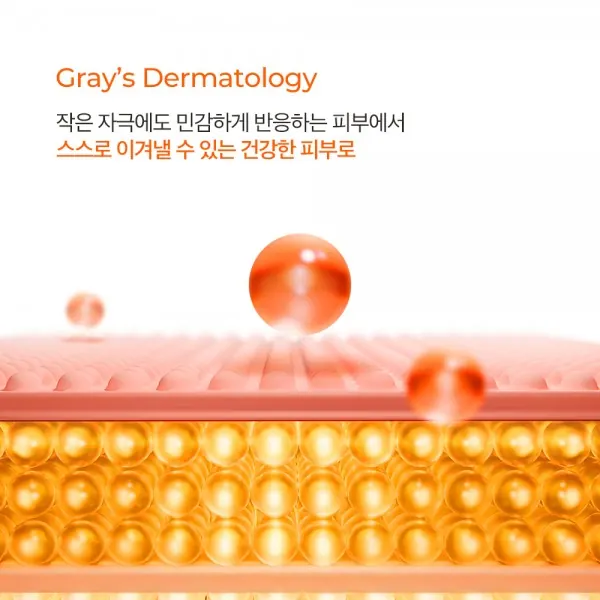
So rather than treatments that punch holes in the skin and throw the gates wide open, I prioritize treatment plans focused on stabilizing the dermis — restoring the skin without damaging it.
Many people say that when acne appears, ‘it doesn't quite seem worth going to a clinic, so I'll just wait and see.’
But that delay is exactly where scars begin.
Red, inflamed marks at the pre-scar stage, brown pigmentation, and atrophic scars where the skin sinks in —
the condition of the lesion differs at each stage, and the treatment approach is entirely different as well.
A board-certified dermatologist makes a careful diagnosis, designs treatment for each lesion type, and takes a step-by-step approach as standard.
If I had to pick the most talked-about acne scar treatment, it would clearly be Gold PTT.
The principle is simple, but the process is quite complex.
Fine gold particles are applied to the skin, then a laser that reacts selectively only to these particles is applied to selectively remove overactive sebaceous glands and inflammation.
The heat energy delivered along with the gold particles reaches the dermis, so combined improvement in skin texture, pores and fine lines can be expected.
Although it is not an invasive, surgical-type treatment, it is a rare procedure that can remodel the dermis,
and it can be considered a new alternative that minimizes the side effects of skin-reconstruction procedures that were once possible only with strong fractional lasers or CROSS methods.
Key aspects of Gold PTT include the distribution of the gold particles, setting the energy intensity for skin thickness, and the angle and depth of laser irradiation.
Naturally, meaningful results can be expected only when a board-certified dermatologist with skilled technique performs it personally, based on an accurate skin diagnosis.
In treating acne scars at our Busan clinic, I take responsibility for designing every step, from a 1:1 personal diagnosis to a customized device plan and aftercare.

Acne scars don't disappear simply by shaving down the surface.
Scars are the result of the dermal structure breaking down after prolonged inflammation, so treatment that restores the dermis and encourages regeneration must always be done alongside.
When a sebum-suppressing medication is needed, I prescribe it only when truly necessary and at the minimum, and I focus on micro-stimulation treatments that draw on the skin's ability to recover rather than indiscriminate high-energy treatments.
Thorough aftercare so that no inflammation remains is also important, and extraction and soothing care by experienced skin therapists matter just as much.
This treatment philosophy doesn't stop at removing lesions from the skin; it is also a process of building up the skin's strength so they don't keep coming back.
Acne scar care takes consistency and precision
From skin diagnosis and scar-type analysis to setting the treatment direction, aftercare and home-care guidance, acne scars with a collapsed dermal structure call for a more delicate treatment process.
Please don't leave recurring acne untreated any longer — I recommend starting treatment now, with an accurate diagnosis and a carefully worked-out plan.
Care that considers not just the lesion in front of you but your skin's future, the careful planning of a board-certified dermatologist, anatomy-based customization rather than indiscriminate device recommendations — I promise care that understands your skin.
The medical information on this website is general guidance only. Diagnosis and treatment may differ depending on your individual condition — please obtain an accurate diagnosis through an in-person consultation.